Purchased: January 2026, Abu Dhabi, United Arab Emirates
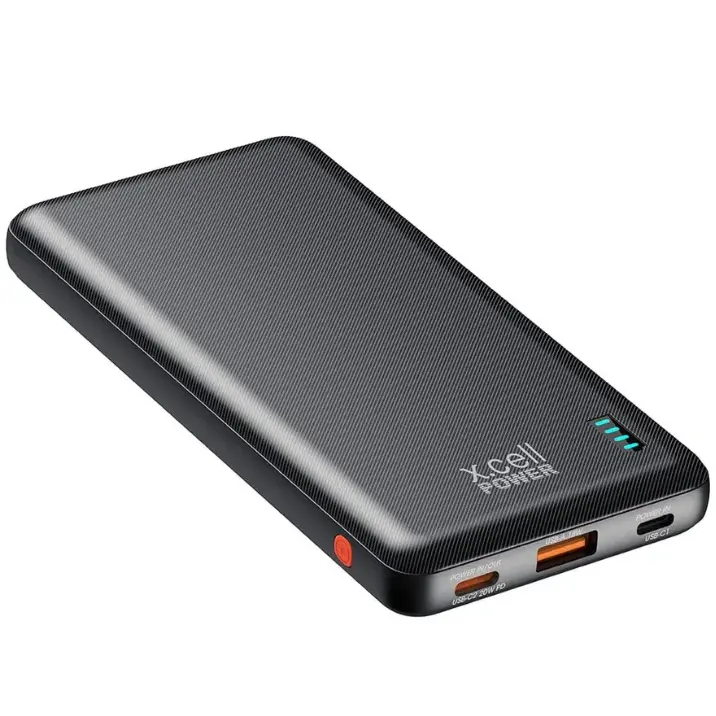
If you own an X.CELL PC-10200PD power bank, I recommend inspecting it for any signs of battery swelling or unusual odours.
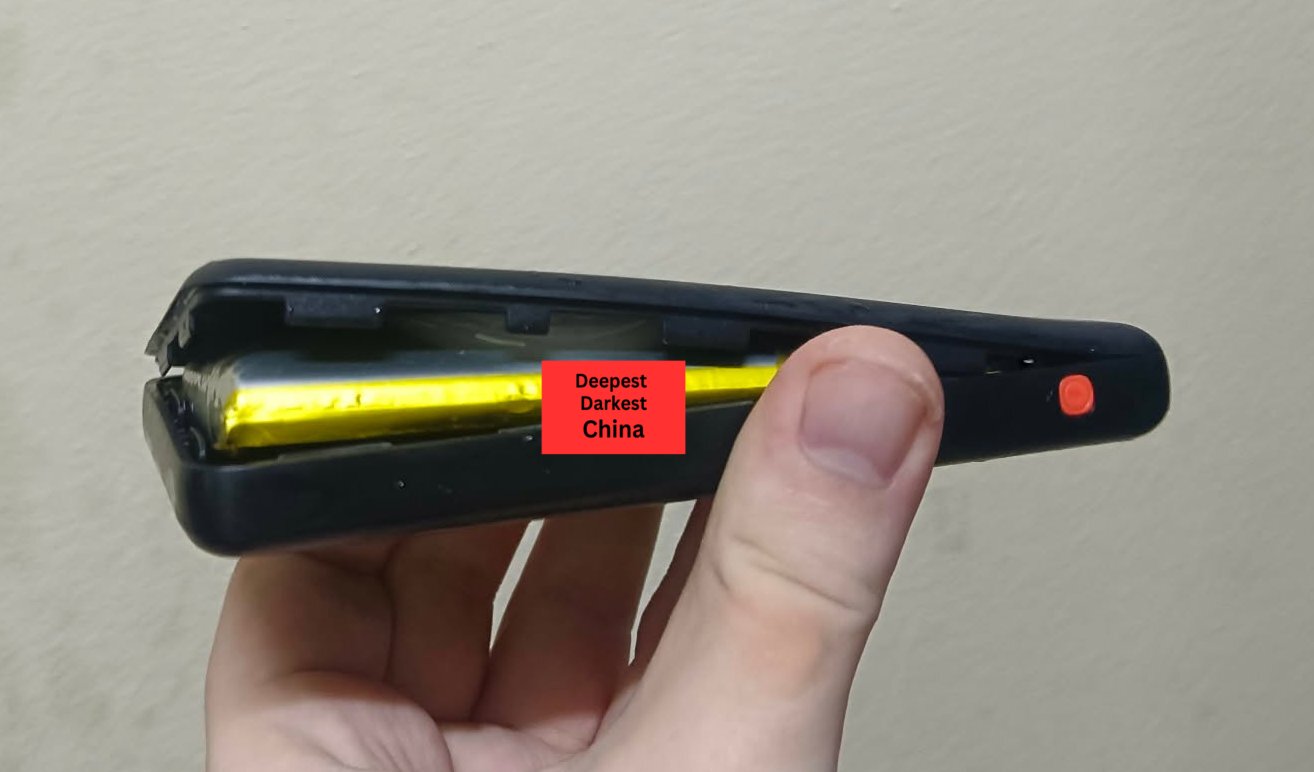
The unit pictured in this article developed a swollen lithium polymer battery after only light use. It had never been dropped, exposed to excessive heat, physically damaged, or modified. It also wasn’t charging when the failure occurred.
What concerns me most is that I had travelled internationally with this power bank on several commercial airline flights before discovering the problem. Fortunately, nothing happened during those journeys, but it was unsettling to realise afterwards that I had unknowingly been carrying a failing lithium battery in my backpack.
I cannot say whether this was an isolated manufacturing defect or part of a wider issue, but because lithium battery failures can present a fire risk, I believe this experience is worth documenting. It’s also worth noting that X.CELL is a brand rather than the original manufacturer, and this power bank is likely based on a mass-produced ODM design sold globally under various brand names.
The Failure
The first indication that something was wrong came from a strong burning smell coming from desk, followed by a popping sound of the battery banks plastic case popping open due to the expanding internal lithium battery.
The unit had simply been sitting on my desk for weeks. It wasn’t charging, but likely still fully charged at the time and hadn’t been used recently. This was particularly surprising because the power bank had seen very little use.
To the best of my knowledge:
- It had only been charged and discharged several times.
- It had never been dropped with no signs of physical damage.
- It had never been stored in excessive heat or left inside a vehicle
- It was not charging when the swelling occurred.
Investigating & Disassembly
Rather than simply disposing of it responsibly, I decided to open the power bank and take a closer look.
The charging electronics are built around an Injoinic IP5356 controller, which is a modern all-in-one chip that supports USB-C Power Delivery, Quick Charge, battery charging, protection (including thermal), and power management.
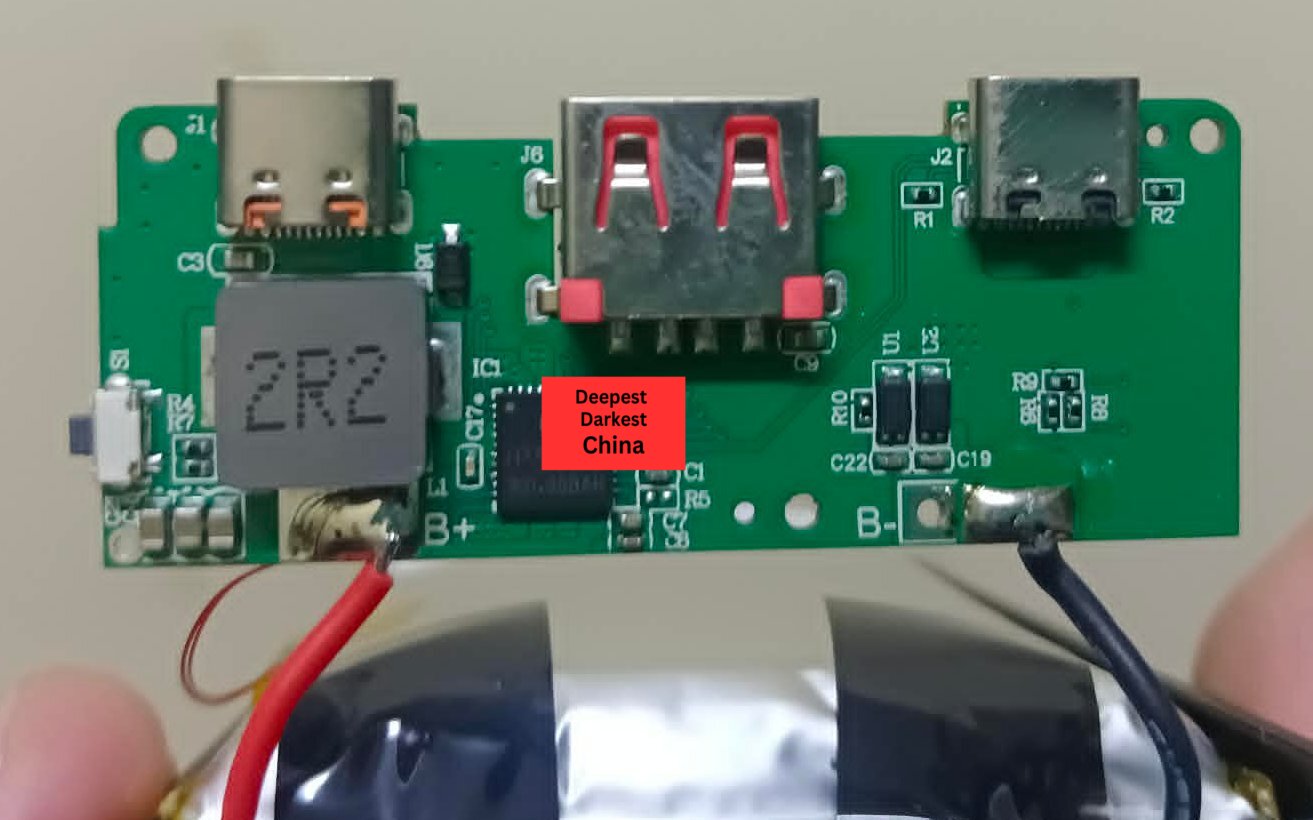
The PCB is marked CY-3639V2, and from a visual inspection the board appeared to be well assembled with no obvious signs of overheating or failure.
The battery itself was marked:
| Specification | Value |
|---|---|
| Logo | TY |
| Capacity | 10,000mAh |
| Voltage | 3.7V |
| Energy | 37Wh |
| Cell Size | 1260100 |
| Production Code | 202401BF |
Despite searching extensively, I was unable to identify the manufacturer behind the stylised TY logo.
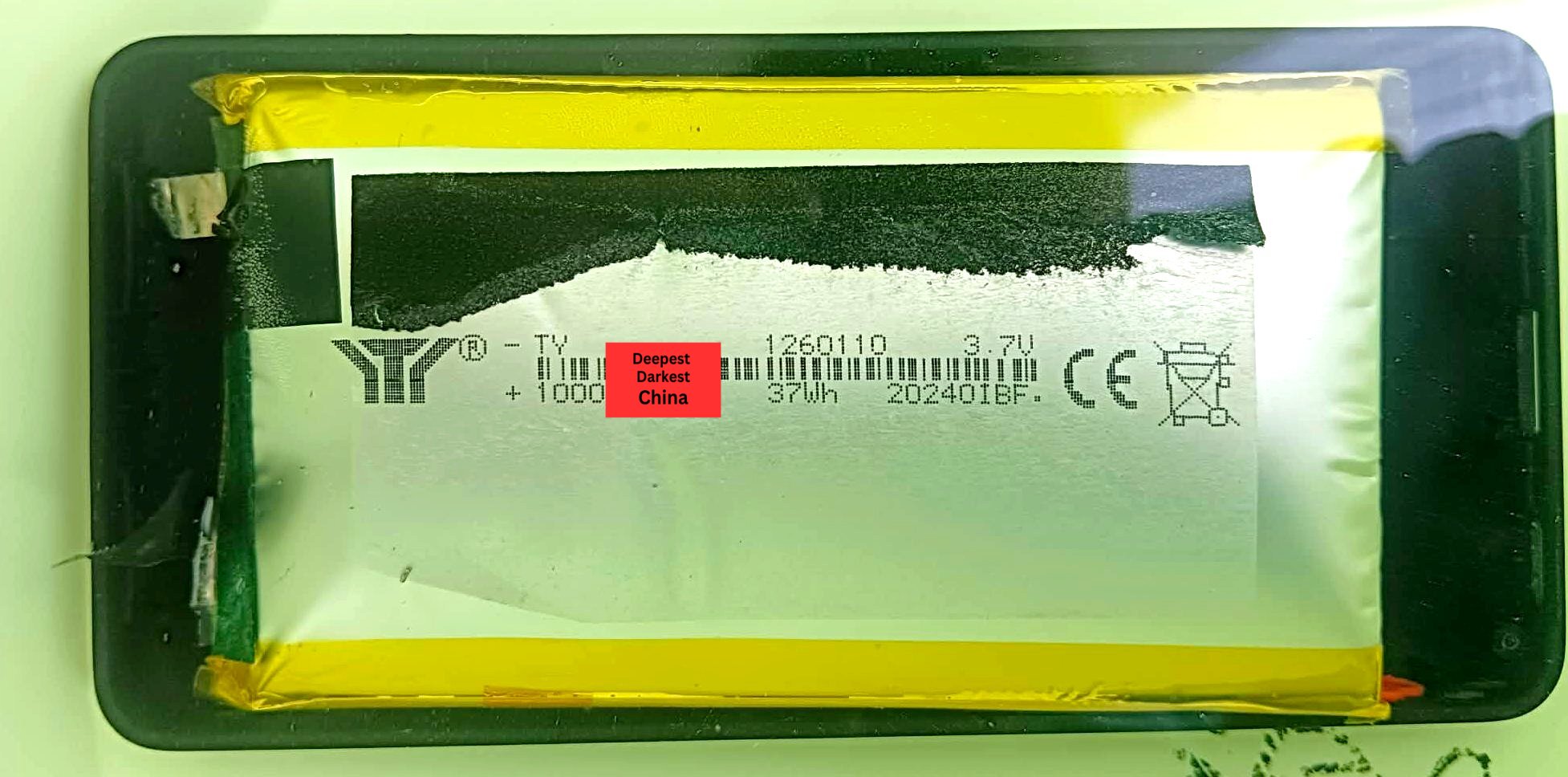
From my inspection, the electronics appeared intact. The failure was isolated to the battery pouch, which had swollen significantly and was producing a noticeable chemical odour. Once placed in a bucket of salty water in an attempt to discharge the battery it still had over 2v when tested the next day.
Why This Matters
Lithium polymer batteries should not swell during normal use.
Swelling occurs when gases build up inside the sealed battery pouch as a result of chemical decomposition within the cell. Without laboratory testing, it’s impossible to determine the exact cause in this case, but possible explanations include a manufacturing defect, contamination during production, or an internal short circuit.
Whatever the cause, a swollen lithium battery should be considered unsafe and in some cases uncontrollably burst into flames which is a big deal if the battery is in your pocket or you are in a vehicle .
If your power bank begins to swell, becomes unusually hot, develops a chemical smell, or the casing starts to bulge, stop using it immediately and dispose of it correctly.
Final Thoughts
This failure was disappointing because, aside from the battery itself being less than a year old from when I purchased it, the power bank appeared to be reasonably well designed. The charging electronics are based on a capable modern controller, and during the short time I used it, charging performance was exactly what I expected.
Unfortunately, a power bank is only as reliable as the battery inside it and using lower quality cells is not uncommon to keep costs down.
Perhaps I was simply unlucky and received a defective unit. However, given that this battery failed after only light use and had already accompanied me on several commercial airline flights before the fault was discovered, I felt it was important to document.
If you own an X.CELL PC-10200PD, I recommend checking it periodically for any signs of swelling, unusual heat, or chemical odours and be careful where it is stored. Hopefully this was an isolated defect, but it’s worth taking a few seconds to inspect a device that spends so much time in our bags, pockets, and carry-on luggage.
If you are in the market for a battery bank, it might be worth paying a few more dollars and sticking with a more reputable brand.
Please leave your comments and thoughts below.